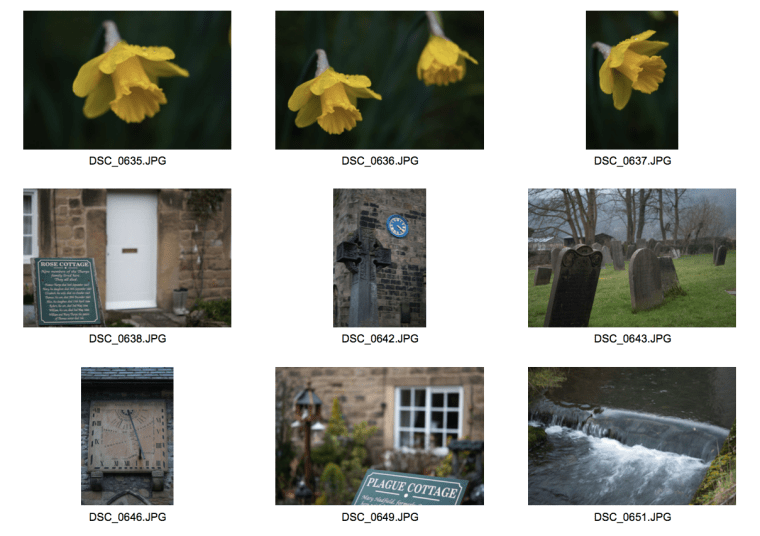
After being inspired by Eugene Atget and making the decision to photograph historical locations, I embarked on a trip to “The Plague Village” of Eyam to document the village’s dark history of the Plague or “Black Death.” After the disease was brought to the village from London in a piece of infected cloth in 1665, villagers selflessly decided to seal themselves off from the rest of the country and the outside world to avoid spreading the deadly disease to others, and the village still tells this story to this day. There are many plaques and boards detailing the story and the methods used to contain the disease, as well as monumental landmarks including the ones I visited and photographed, such as: the Plague Cottages where the victims of the disease once lived and modern families now inhabit; the Church of St Lawrence which dates back to Saxon times and features an eighth-century Celtic Cross and churchyard; and an old traditional Sheep Roast, plus many more attractions such as the museum which were unfortunately closed when I visited. I used my Nikkor Micro Prime Lens with a wide aperture to create an effective, shallow depth of field and focus on certain parts of the image, such as the “Plague Cottage” plaques to explain the backstory within the image and give some context.
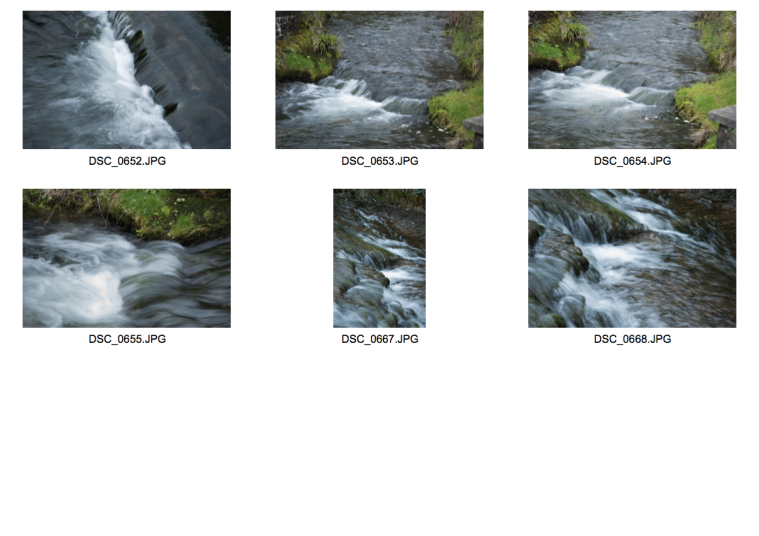
Afterwards, I visited the nearby village of Castleton and took a stroll along a lake, capturing the moving water using a slow shutter speed of about 1/8th of a second, and balancing the camera on the stone wall to minimise camera shake. I also took the opportunity to photograph some dandelions with a shallow depth of field which were inspired by Atget’s photographs of flowers in a similar style.
Here are the original images:
Next, I narrowed down the most successful images and edited them in Camera Raw, ensuring none of the highlights or shadows were blown out with the clipping warnings, adjusting the exposure and straightening any horizontal or vertical lines that needed tidying up. Below are the final images: