This assignment excites me because I am free to be as creative as possible; the subject matter is completely open, meaning the possibilities are endless and I can interpret each subject in any way I like. However, this can also be daunting because it can be hard to decide where to start, or which ideas to take forwards. Furthermore, I think this assignment will help further develop my photographic eye by encouraging me to explore how light affects and changes the things around me, and how this can communicate different things to the viewer.
Part A: Light and Shadow
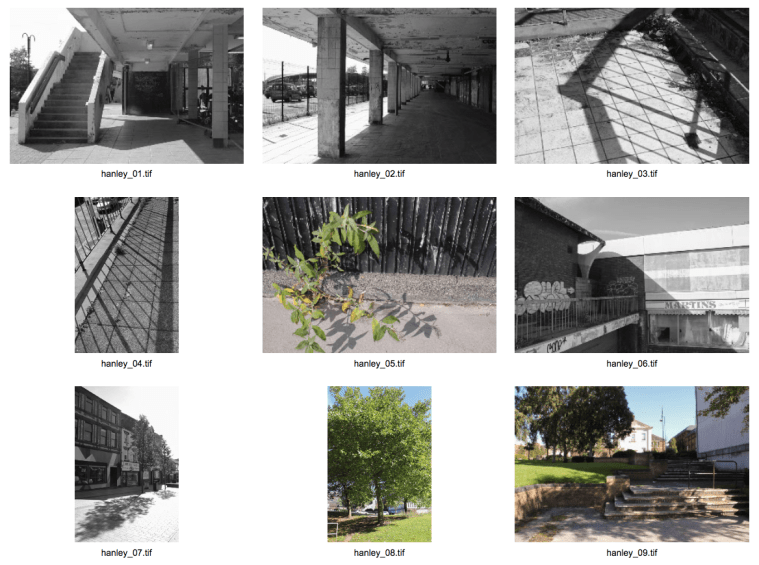
This subject excites me the most because it is so broad and I feel like it allows the most freedom and creativity. I would like my images for this subject to have depth and evoke feelings and emotions from the viewer. Shadows are effective in creating a certain mood or atmosphere, possibly with a sinister feel; whereas bright, white lighting is associated with more positive, happy feelings. I plan to experiment with different variations of lighting to see what kind of emotions these evoke, and how lighting affects the shadows. I can also use light and shadow to create visually pleasing images, as not all photography must have a particular idea or concept behind it; spontaneous shots can be just as effective!
Part B: Everyday Geometry
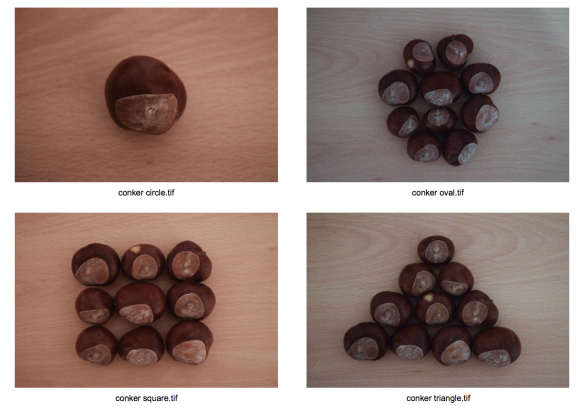
The first thing that comes to mind about this subject is food photography. The assignment states that the objects used to create the geometric compositions must be relatively flat and no higher than 2cm; food can be sliced and cut into thin pieces to meet this criteria. Many foods are also already shaped geometrically: donuts, sweets, biscuits, lemons, limes, oranges and berries, to name a few. Many of these items are colourful and therefore I can create some strange and interesting compositions by contrasting them against the background. However, I won’t limit myself to only using foods and will experiment with other everyday objects too. Geometric patterns are often aesthetically pleasing for the viewer, but I may also be able to create some evocative images by experimenting with the light and shadow.
Part C: Who’s Who?
This is another subject that interests and excites me because I am a very open minded person, and I can already imagine lots of different ideas to create evocative images by challenging the way we perceive people, simply by judging their outward appearance. I am required to take pictures of people that I don’t know, which is something very far out of my comfort zone, however I plan to embrace this and I think it will be interesting to learn about new people who maybe I wouldn’t usually speak to. Furthermore, I think it would be really interesting to challenge stereotypes in this part of the assignment; I could juxtapose a photograph showing the image we create of people from the way they dress or look, alongside an image portraying the “real” person and their true personality, which may be the complete opposite of the initial assumption of the person. Another idea would be to take a natural photo of people in the street, and ask them for an interesting or unusual fact about themselves that nobody else would know. This may also create a juxtaposition and get the viewer thinking about how the image we create about someone based on their appearance isn’t necessarily who they truly are.
Next, I plan to create some Pinterest boards to find some examples similar to the ideas I already have, and also find some inspiration for other ideas I could pursue. I will also research into some artists and photographers who inspire my work and work in similar ways themselves, and begin my visual development by undertaking practice shoots to experiment with my ideas.


 PHOT40151 / THE PHOTOGRAPHER'S EYE, JADE WARD, SUPPORTING WORK