Final Images and Printing Process

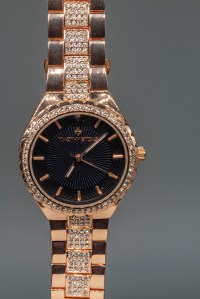
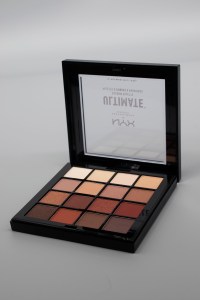
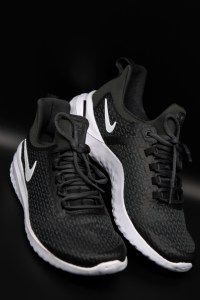
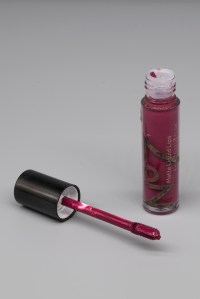
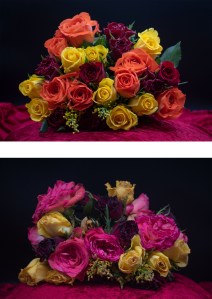
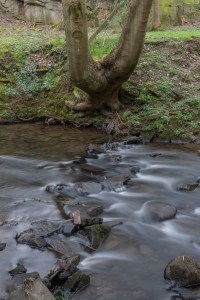
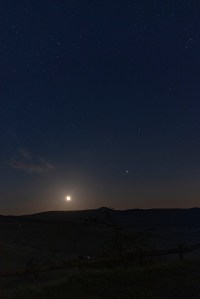
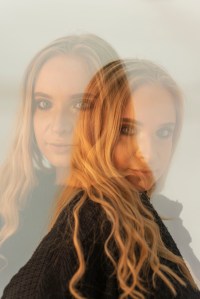
These are the images that I have chosen for my final images.

  • Row 1: Objects of Desire
  • Row 2: The Enigma of Time
  • Row 3: The Constructed Image

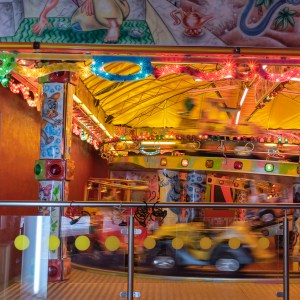
I chose these images because I feel that they are the four most successful images from each category, and that they all have high impact. I decided to stay away from strict themes this semester to allow myself to experiment widely with different photographic processes and techniques, and avoid repeating images from the same shoot. I think that I have a wide variety of commercial photography, location shooting, studio shooting, night time photography, and two photographic processes (multiple exposure and photomontage) that I have discovered and expanded my skills with during this module. I had never shot multiple exposures before and found this really fun to experiment with. I also found creating digital collages was fun as it takes me back to my studies in Graphic Design, and it felt great to incorporate both my interests into my projects. If I could change one thing it would be that all the images in a set were in the same orientation (e.g all landscape, portrait or square) rather than mixing within a set, however this was beneficial for my images to remove unwanted distractions or white space.

The printing process was quite straightforward as I had remembered what to do from last time. The papers I used were A4 FB Royal Gloss 310gsm which I used for most of my images, as I really liked the glossy appearance and the way it makes the colours really bold and punchy. I also used A4 FB Matt 285gsm for a couple of images; the Blackpool multiple exposure and the long exposure of the river; because the matte finish gave a calm feel to the images and colours, which is already expressed in each image. I tried printing the image of the stars and the ageing flowers onto matte paper, but the results were terrible and unflattering as the colour gamut wasn’t as broad and the blacks were very dark and didn’t mix well with brighter colours. I then printed them onto glossy paper and they were much more effective and closer represented what was on the screen. I was unsure whether to use the image of the stars with a warmer or cooler colour temperate, so I printed both to see how they turned out. The one with warmer, orange tones was full of noise and of low quality, whereas the one with cooler, darker, blue tones was sharper, the stars were more visible and overall looked more impactful. I was advised by Dave that this is because orange is part of the red colour channel, which holds much more noise than the blue colour channel, which is why the level of noise and quality of the image varied so massively. Therefore, I kept the cooler toned image as my final print.

Teacups and Saucers – VISUAL DEVELOPMENT – Constructed Image

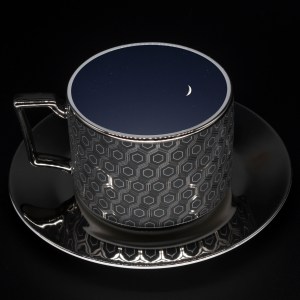
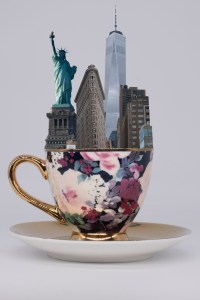
My other main idea for the Constructed Images was to photograph a cup and saucer, and photoshop different elements inside the cup to create a collage/photomontage. My first idea was to photoshop one of my images of the stars and the night sky into the cup, so that it looked like the stars were filling it up. I had seen similar ideas on Pinterest that inspired this idea, but I wanted to personalise the items that I imposed into the cup. Another possible idea was to photoshop some of the landmarks and skyscrapers from my trip to New York into the cup, to appear like there was a city within the cup. Therefore I began photographing in my home studio again, with two different coloured sets of cup and saucers to see which was most effective. I shot them from various angles so that I had a wide choice of which images to impose into which cup; I also varied the lighting to find an effective lighting setup and found an appropriate exposure, which needed to change to the complete opposite once I swapped from the bright, white cup and background to the darker, silver cup with black background. Here are the images from the shoot:


The Editing Process

Next, I was tasked with editing the images on Photoshop to add in the elements that would produce the collage and turn the images into a Constructed Image. I imposed the stars into the cup by first drawing out an ellipse shape the fill the top of the cup, then placing another layer with the photo of the stars and creating a clipping mask to clip the photo into the correct circle shape. I then added another layer where I used “select and mask” to add a picture I had taken of the moon into the image, to add to the night sky element and add more layers to the collage. I chose the silver cup and black background because I felt this colour scheme was fitting with the dark night sky and bright stars.

I was so happy with this first image that I wanted to see what the New York teacup would look like, too. I used the “select and mask” method again to individually cut out the Statue of Liberty, Flatiron building and World Trade Centre and some surrounding buildings, smoothed the outline so that it looked more natural, and used the ruler guides to help me place them level with the top of the cup. The image has an almost surreal and pop art kind of vibe to it, which I think is really interesting and appropriate for a collage. Here are the final edited images:

Multiple Exposures in the Uni Studio – VISUAL DEVELOPMENT – Constructed Image

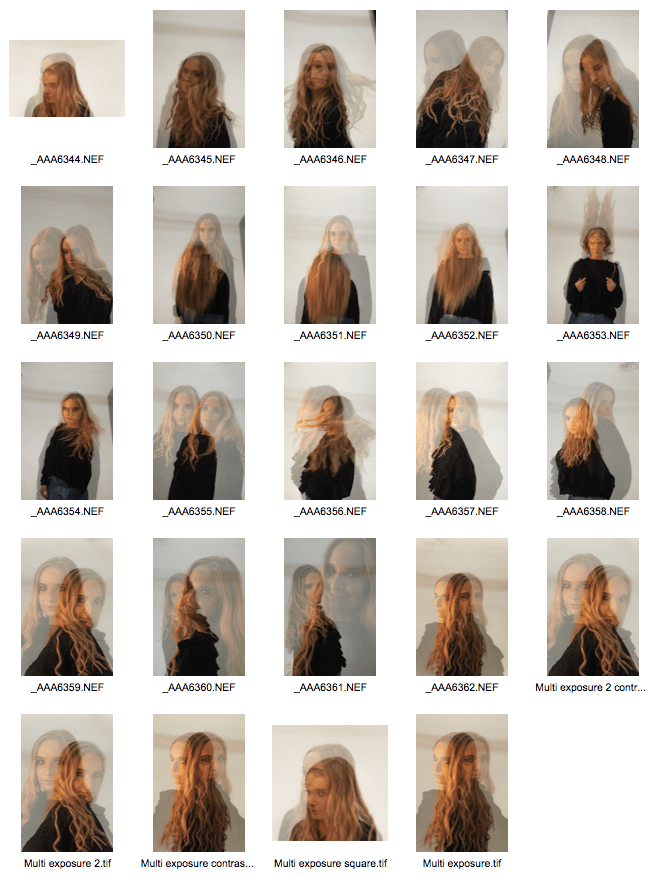
For the Constructed Image, I wanted to experiment with multiple exposures as I really like the effect they give with layering multiple images onto one frame. I wanted to do this properly and authentically by doing the exposures within the camera, rather than taking the easy route and merging two photos together on Photoshop post-shutter. I booked one of the studios at the university, with the lighting rig in H34, and took along one of my peers so we could experiment with the lighting, and also undertake some shoots for our assignments. I brought along my own camera, however this didn’t have the multiple exposure feature, and so I used the camera that came with the kit as this did have the correct feature. I set the camera to two exposures, used the light meter to set the correct exposure, and began shooting multiple poses to find the most effective combination for this process. I found that the first few images with the subject overlapping twice made the two images difficult to distinguish and kind of distorted the image, so this wasn’t successful. I then tried to get the subject in both halves of the frame, so that both images could be seen. Another trick we tried was a hair flick, to freeze the movement of the hair and overlap this with a static image. I think the most successful images are the ones towards the end of the contact sheet, where the subject appears in both halves of the frame with effective postures. The one labelled “Multi exposure 2 contrast.tif” is my favourite at this point as the subjects eyes can be seen on both sides and this creates a connection with the viewer.

Screen Shot 2019-04-07 at 22.54.32


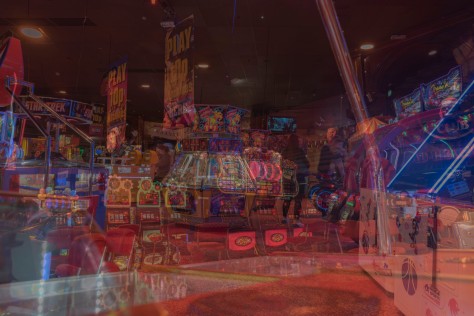
Intrigued by the process and results of multiple exposures, I also decided to experiment with a couple of pictures that I took in Blackpool. I imported the two candid pictures that I took, similar to the style of Martin Parr, into Photoshop and changed the opacity so that one image overlapped the other, with both of them still being visible. I tried both ways around with one image on the top layer and one on the bottom layer, then vice versa, to find the most effective composition. I also altered the opacity percentage to find the most effective setting. Combining the images adds to the juxtaposition of the family area of the arcade vs. the adult, gambling side. This was the result:

Constructed 2

Photomontage by Dawn Ades – RESEARCH – Constructed Image

IMG_2260

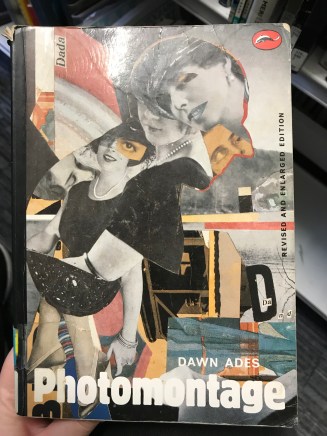
While browsing the university library for books relating to my essay, I came across this book, “Photomontage” by Dawn Ades, and thought it would be a great idea to browse the pages to look for inspiration for the Constructed Image assignment. I have found this assignment the most difficult out of the three; although I appreciate a broad brief because it allows lots of creative freedom, it can prove tricky to choose which of your ideas will be the most successful and what subjects are most suitable to use, and therefore which ideas to take forward and pursue.

Photomontage and Collage are two of the processes that we can try for this assignment, and I like the idea of incorporating more than one photo into an image to create weird and wacky artwork, such as the work created by the Surrealists. A combination of images in this way can create something unreal and “fantasy” like, because people, places and objects can all be pictured together that maybe would never usually be pictured together in a single, unaltered frame taken in the present moment, or the “real world.” These techniques are totally different to the ones we learned and used last semester, and so I’m excited to try something new and expand my range of photographic processes.


IMG_2259

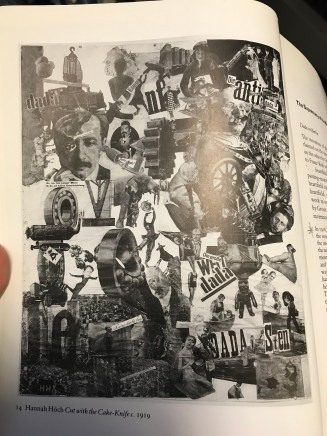
Hannah Höch, Cut with the Cake-Knife (c.1919).

Hannah Höch was a Dada artist, best known for her political collages and photomontages. Her compositions share a similarly dynamic and layered style to the works of her inspirations: Pablo Picasso and fellow Dada artist, Kurt Schwitters. Höch used her work to critique the failings of the Weimar German Government, by rearranging images and text from the mass media into collages. She preferred to be more metaphoric with her imagery, rather than taking a direct approach using text and confrontation, such as the work of John Heartfield. When the above piece was created, there was political chaos in Germany after the lost WWI. There was a struggle between two political parties; German society was navigating its way out of the old Weimer Republic and into the left-wing Communist movement. The artists within the Dada movement used photomontage to express messages of critique that would not be allowed to be put into words because of censorship. Pieces of machine can be seen exploding throughout the montage, symbolising the booming industry and culture within urban areas. This process is portrayed in a circus-like environment, rather than in a proud and sophisticated manner; the theatrical expressions and body language, mixed in with images of political figures, are used to critique the two political parties.


IMG_2262

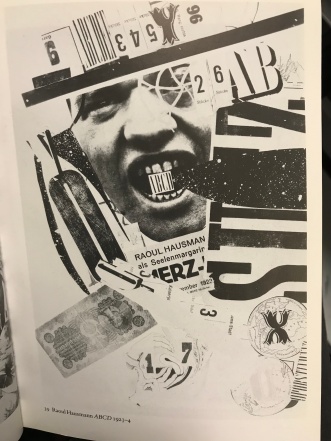
Raoul Hausmann, ABCD (1923-4).

Hausmann was an Austrian artist, best known for his satirical photomontages and his provocative writing on art. He was the founder and central figure of the Dada movement in Berlin. He met Hannah Höch in 1915 and they established a romantic affair and artistic partnership that lasted until 1922. He was involved in Expressionism until 1917, when he was introduced to the principles and philosophy of Dada; these artists created works that could question capitalism and conformity, as they believed this was the motivation for the war that had just ended, leaving behind chaos and destruction. Similar to Höch, Hausmann created collages by superimposing photos and text together that he found in newspapers, magazines, etc. In fact, it is believed that Hausmann and Höch discovered photomontage while they were on vacation on the Baltic Sea in 1918. ABCD was the final photomontage he produced, before he turned to more-traditional media. In the image, his face appears in the centre with the letters ABCD clenched in his teeth, in reference to a Dada poem. An announcement for one of his poetry performances is also collaged right below his chin. You can also see the word “voce” to the left side of his face; this translates to “voice” and represents the voice of the people wanting a revolution.


IMG_2263

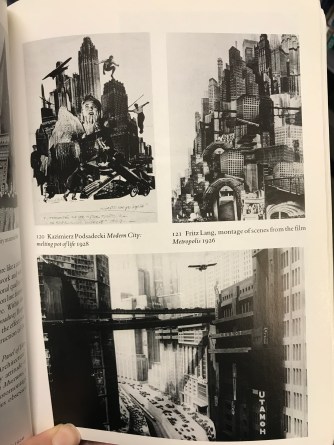
Top left: Kazimierz Podsadecki, Modern City: Melting Pot of Life (1928).

Podsadecki was a Polish painter and creator of Constructivist art. He was also interested in photomontage and experimental films. His early works were photos of compositions that he had made from various objects, and these may have been influenced by the concepts of Man Ray and Marcel Duchamp. He quoted important modernist photographs and films within his work, which was unique within European modernist art of the time. Modern City: Melting Pot of Life is themed around life in a metropolis and participation in a modern technical civilisation. It is an example of Catastrophism, which was a popular trend in the culture of the 1920s and 1930s; the trend mentioned not only the previously mentioned civilisational progress and technological development, but perhaps most importantly the subject of war, which was often depicted by an apocalyptic vision of the future. The image is dominated by solid modern tower blocks which are pieced together to create a compact mass, which represents the way that architecture is dominating and unstable and is overwhelming the world and its inhabitants.

As soon as I saw this image, it reminded me of the skyscrapers and tower blocks that I saw and photographed on the university trip to New York in February. This has given me the idea to create a constructed image, such as a collage, featuring some of these buildings somewhere. My initial thought is a teacup and saucer with the landmark buildings stood up inside, like a little city within the cup. I will work on this and experiment with layers and masks on Photoshop.

The Photographer’s Eye: Lecture Notes

This module is focused on the book titled The Photographer’s Eye by John Surkowski. The book outlines the 5 key characteristics that produce a successful photograph:

  • The thing itself
  • The detail
  • The frame
  • The time
  • The vantage point

The thing itself (photographs) are different from reality – reality can be filtered, clarified or exaggerated and allows for the creation of fantasy.

‘The detail’ refers to the use of photography to capture things that are too ‘ordinary’ to paint; details can’t narrate but they are symbolic and evocative for the viewer.

‘The frame’ encourages the photographer to choose and eliminate the frame to focus on particular subjects. New relationships can be formed by isolating subjects from the background.

‘The time’ explains how photographs can only describe the present, at the exact moment of the ‘click’ of the shutter. Therefore, photographs will always be in the past when viewed.

Cameras allow for different vantage points to painting as they are more portable and a variety of angles can be taken by handholding a camera, rather than painting with an easel.

Project 1: Objects of Desire

Transform an everyday object into an ‘Object of Desire.’ This could be achieved by taking the route towards studio still life photography. A bigger light source will remove any unwanted shadows in these images.

Photographers:

  • Richard Maxted
  • Association of Photography (AOP)
  • Simon Larbalestier
  • Carol Sharpe
  • Adrian Lyon
  • Wilson Hennessy
  • Tal Silverman

Project 2: The Enigma of Time

Use ‘time’ somehow in your images.

Photographers:

  • Francesca Woodman
  • Catriona Grant
  • David Scheinmann
  • Alexey Titarenko
  • Michael Wesely
  • Duane Michals
  • Gina Glover
  • Bill Brandt

Project 3: Constructed Images

Construct images using any of the following:

  • Multiple Exposure
  • Multiple Printing
  • Montage
  • Image and Text
  • Mirrors
  • Layers

Photographers:

  • Hannah Hoch
  • Man Ray & Dora Marr
  • Herbert Bayer
  • John Stezaker
  • Barbara Kruger
  • Paul Hill
  • Abelardo Morell
  • Mindo Cikanavicius
  • Zander Olsen
  • Robin Maddocks
  • Oleg Oprisco
  • Gillian Wearing
  • Loretta Lux

The History of Photography

There are various dates that contribute to the birth of photography. According to history books, photography began in 1839. However, it is said that Joseph Nicephore Niepce took the first photo that still exists back in 1827. Then, Hercules Florence first used the word ‘photography’ in 1832.

Prehistories

Among the first photographic processes were Paleoloithic cave paintings dating all the way back to 10,000BCE.

There are early written records of experiments with light and the Camera Obscura from 1,000BCE. Photographers such as Johannes Vermeer began using the Camera Obscura within their practice from 1,500BC.

70CE – Roman chemistry experiments.

1,100CE – The Alchemists used light to darken silver salts.

1,717 – Johann Schulze experimented with “fleeting sun pictures.”

1790 – Thomas Wedgwood experimented with the Camera Obscura and silver nitrate sun prints.

The Camera Lucida was invented by Dr William Hyde Wollaston in 1807.

The first photograph of a person was taken by Louis Daguerre in Paris in 1838, where a man is pictured having his shoes shined on the pavement next to the road.

William Henry Fox Talbot took his first image titled “The Oriel Window” in 1835, and created the world’s first photo book called “The Pencil of Nature.”

In 1847 the law in France considered photography as a ‘mechanical process’ and not art.

Up to 1851, the Daguerreotype was “the technology.”

Frederick Scott Archer provided the breakthrough in 1851: the Collodion glass negative, with the advantage of detail and speed.

Roger Fenton used the wet Collodion process and a portable darkroom in 1855.

In 1871, Richard Leach Maddox invented lightweight gelatine dry plates which were a revolution at the time!

Further research then lead to snapshot photography and the Kodak camera with roll film.

The Portrait

The literal definition of a portrait is: a drawing, painting or photograph of a person. A more accurate definition, however, would be: a representation of a person. Ask yourself: Does it simply record the outer surface, or provide insight into their character?

Cindy Sherman dresses up in various costumes and poses for her photos, frequently portraying female stereotypes found in film, television, and advertising. However she does not label these as “self portraits” because in that moment she is interpreting another person, not her genuine self.

Robert Cornelius produced the world’s first deliberate portrait in 1839.

David Bailey is another huge name in portrait and fashion photography, and is best known for his iconic portraits of artists, musicians and actors of the 1960s and 1970s, such as Andy Warhol and the Rolling Stones.

Other Portrait photographers include:

  • Diane Arbus
  • Garry Winogrand
  • W. Eugene Smith
  • Richard Avedon
  • Philip Lorca DiCorcia
  • Adrienne Norman
  • Astrid Schulz
  • Steve McCurry
  • William Wegman

The Self Portrait

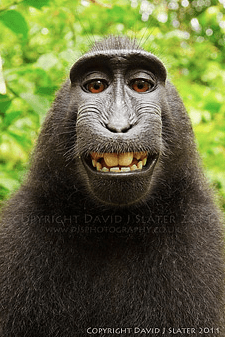
David Slater is a British wildlife photographer; he is most famous for his image of “the monkey that took its own photograph.” On a trip to Indonesia, he was following a group of Sulawesi macaques in the forest, in an attempt to connect with them and co-exist peacefully with them, while of course photographing them along the way. After a long day, Slater sat down close by to the group of monkeys for a rest, while they were having a group grooming session. Soon enough, the monkeys came closer and become grooming him too! They also took a liking to his camera and so the photographer placed the camera on his tripod with a very wide angle lens, predictive autofocus and a flashgun set, in the hopes of capturing a facial close up. His efforts were worthwhile as the monkeys began grinning and pulling faces in the lens of the camera, pressing all of the buttons and inevitably some photographs and “self portraits” were taken, including the iconic photo we now recognise today! However, his photo has caused Slater a lot of financial difficulty as he has been frequently dragged through the courts over the debate of copyright of the image; is Slater right to claim ownership of the image, or does the copyright belong to the monkey itself as he was the one who pressed the shutter?! This debate has opened up an interesting conversation about copyright and what is technically defined as a “self portrait.”
Screen Shot 2019-04-06 at 19.40.42

Francesca Woodman photographed herself in empty interiors, often nude or semi-nude, to portray her suffering with mental illness such as anxiety and depression. However, her pictures are not traditional self-portraits. In her images, she is usually half hidden by objects or furniture, or she appears as a ghostly blur. She plays with distorting reality into a surreal fantasy by squeezing herself into small cupboards or wrapping herself under wallpaper like a blanket; she often seems to be retreating and hiding within the materials of the building. The images create an underlying sense of human fragility, vulnerability and isolation, which is further exaggerated by the fact that the photographs are printed on a very small scale, making them seem personal and intimate. These images connect with me personally as I know how it feels to battle your own demons and I completely understand and am inspired by how Woodman can capture her inner feelings within a physical image.

Other Self Portrait photographers include:

  • Peter Kennard and Cat Picton
  • Hippolyte Bayard – took the first known self portrait
  • Nan Goldin
  • Claude Cahun – inspired by Cindy Sherman
  • Dorothy Wilding – first female photographer for a royal household
  • Marta Hoepffner
  • Vivian Maier
  • Wanda Wulz
  • Arno Rafael Minkkinen
  • Yves Klein
  • Lee Friedlander
  • Duane Michals
  • Phillip Toledano

The Place

“Place” refers to vast open spaces and landscapes. It includes mainly nature photography but it can also include man-made structures and urban areas; it has a very broad and flexible definition. When photographing a landscape, cutting out the sky can change it from simple being “a view” to a landscape photograph – framing is important!

There are four main types of landscape:

  • Natural landscape
  • Urban landscape
  • Social landscape (e.g street photography)
  • Psychological or Emotional landscapes (inner landscapes)

Robert Adams, a landscape photographer, said that there are three main elements to photographing places: Geography, Autobiography and Metaphor. Taken together, they strengthen and reinforce each other and create a successful and powerful photograph.

Pre-17th Century, landscape was confined only to the backgrounds of other genres. But after the 18th Century, there were three types of landscape photography:

  • The Sublime – awesome sights, nature at its most fearsome.
  • The Beautiful/Pastoral – inhabited landscape, smooth and ordered.
  • The Picturesque – ruins and incomplete buildings, gives an edgy feel.

Edward Burtynsky photographs manufactured and industrial landscapes, such as factories. He documents people and their place in relation to the world, and their impact on the environment. He photographs quarries and mines which document extraction in the landscape – begging the question “how long will our oils and fuels last if we continue?” He also photographs pollution, rubbish, recycling materials and landfill sites. Large factories are placed in our environment due to our consumer lifestyle; as humans, we use and dispose of things all the time. Man-made structures include roads, houses and cars which are also mass-produced and take a toll on the environment. However, Burtynsky wants to show that even industrial, urban or conventionally unattractive places can appear beautiful through a lens and the power of photography; landscapes don’t always have to be “beautiful” and “perfect.” His work is Post-New Topographics, the book of photographers that also photograph urban landscapes and focus on how humans are affecting and damaging the planet. He uses large format prints to capture every detail and make sure it’s visible.

Landscape photographers include:

  • Ansel Adams
  • Jitka Hanzlova
  • Liza Dracup
  • Albert Bierstadt
  • Noemie Goudal
  • Eugene Atget
  • Bill Brandt
  • Lewis Baltz
  • Stephen Shore
  • Bernd and Hilla Becher
  • Joel Sternfeld
  • Simon Roberts
  • Rut Blees Luxemburg
  • Edward Burtynsky
  • Richard Mosse
  • Ed Rusha


Oleg Oprisco – RESEARCH – Constructed Image

Oleg Oprisсo is a fine art photographer; he was born in the small city of Lviv, Western Ukraine. His interest in photography began when he worked in a photo lab for three years aged 16 years old, where he gained an understanding of the images and poses that were most liked by customers, and he still uses this as a reference for the work he produces today. In 2009, he switched formats from digital capture to film.

His images and creations often have deep, thoughtful meanings behind them. He photographs ‘real life’ scenarios, then manipulates the image to add other features such as people and props, creating a ‘dream-like’ or fantasy feel. He takes his inspiration from his everyday life, such as the things he sees on his way to work, and recognises that there is so much beauty to be found in everyday life; a view that I also personally share, and I want to capture this in my work. Everyday items may appear simple, but beauty can be found within them if we take the time to look and change our mindsets from viewing them as mundane.

Some inspiring examples of Oprisco’s work are below:

PHOT40151: The Photographers Eye: Introduction and Initial Thoughts

This module is based on the publication “The Photographer’s Eye” by John Szarkowski. I have been asked to implement his ideas into my own photographic work, by developing my creative image processes. I must produce four prints for each of the following themes: Objects of Desire, The Enigma of Time, and The Constructed Image.

As the brief says, Objects of Desire requires me to evoke the feeling of desire within my images, with my own choice of subject, studio or location shooting, flash or ambient lighting, etc. With the popularity of online shopping and social media, we see many images everyday of items that evoke these feelings of desire within us, such as food, cars and fashion; however we often don’t stop to consider how these images were constructed, and how they provoke a response such as persuading us to purchase or use something, or otherwise affect us in some way.

My initial thoughts on this theme are that I will begin to experiment with studio lighting and produce images with a commercial style/theme. I like how the images in this genre of photography have a great emphasis on lighting and create a huge impact on the viewer; I would like to explore this avenue to further develop my understanding of lighting within photography and how this can affect the way an image and the subject looks. I have purchased a portable photography studio complete with lighting which will enable me to experiment with this idea from home. Initial ideas for subjects include flowers such as roses; these are very romantic which play on the theme of Desire, and I have also purchased some fabrics with a velvet feel to further evoke desire and to compose more unique photographs than the stereotypical flower shots you would usually see. There are many variations of flowers which will enable me to expand on this idea further as I go along.

The Enigma of Time relates to one of the key elements that Szarkowski states in his book “define the medium of photography:” Time. Therefore, I am asked to produce four images that simply use Time in some way to affect how they look. Again, I am given free reign over the choice of location and lighting, as long as my images evoke a response from the viewer.

Initial ideas for this theme include using motion blur in some of my images to depict the idea of movement and time; I will be attending the university trip to New York where I hope to use this technique to show how busy the city is and how it “never sleeps.” This technique can also be experimented with anywhere local that is busy with plenty of movement such as busy roads and city centres, shooting anything from vehicles to people. Another idea for this theme that I recently had was to recreate some of my first photographs with my boyfriend from 6 years ago, therefore showing how our appearances have changed with time but if I can take them in exactly the same places then I can also show how our surroundings have changed, too. I feel that this would evoke a response from the viewer to start wondering how our emotions, thoughts and our lives in general have changed too; prompting them to think further and deeper than just the outward appearance.

The Constructed Image encourages us to think more about the construction of our photographs, by using techniques such as montage, collage, multiple exposure, multiple printing and the combination of image and text, to create complex and dynamic images beyond “the straight frame” or the ordinary. Again, I must produce four images that somehow use the techniques above by making creative and unique decisions, without emulating others’ work.

This theme, I feel, is the most broad out of the three. This has both positive and negative aspects, as it allows me to be completely free with my subject choice and the techniques that I undertake; however, this can make it very tricky to know where to begin with my experiments. My previously mentioned idea about reconstructing past images could also be used here for this theme, as it could prove effective to montage the old and new images together to create something entirely unique; I will consider which theme this idea suits best. After some consideration and research, I have also had the idea to photograph the local area and countryside where I have grown up, and take many shots of one scene to later arrange and piece together into a photomontage, similar to a jigsaw and creating a new dynamic to the photograph, rather than a normal, straight, rectangular image. I will play with this idea and see where it takes me.